
Following the basic introduction lesson that we had last week I attended another Digital Cinematics workshop to learn more about the work with a DSLR film camera.
First, we recapped our work with the Canon 5D Mk II from last week. We agreed that the strengths of this specific camera lie within its good low-light quality and the cinematic aesthetics (using progressive frames and good exposure latitude). The selective focus was an advantage and a disadvantage at the same time. The moiré and the rolling shutter (‘jello effect’) were some more challenges of the Mk II, as well as the ergonomics (the camera comes with a still camera body and the LCD screen can be tricky to see in bright sunlight). Moreover, the 24p/25p required measured camera movements and the built-in microphone was poor.
After that we spoke about sensor sizes, neutral density filters and depth of field. I already knew some things about depth of field and aperture settings from my own photographic work, but everything else was new and very interesting to learn. I didn’t know that you can not film properly outdoors in bright conditions without using neutral density filters on your DSLR. I also wasn’t aware that while the Mk II has a full frame sensor, some other cameras have cropped sensors and therefore give a different aesthetic.
When Stuart started talking about chroma subsampling, I could not follow at all. The technical terms were too complicated for me to understand, but thankfully he showed us a video from Alexander Fox which explained the whole topic brilliantly:
Alexander Fox (2010) Ask Alex – The 411 on 4:4:4. 24 February. Available at: https://www.youtube.com/watch?v=7JYZDnenaGc (Accessed: 13 October 2019).
Stuart also told us to never use in-camera sharpening because the quality tends to be poorer than with post-production tools. It’s also very difficult to monitor on the portable LCD screen: Things that might look good on there could look hideous on a calibrated display. He recommended to do any sharpening later under the controlled circumstances of an editing software. There it would also be possible to adjust the amount of sharpening to the requested output media – a YouTube upload needs different sharpening than a feature film.
Alexander Fox (2010) Ask Alex – The 411 on 4:4:4. 24 February. Available at: https://www.youtube.com/watch?v=7JYZDnenaGc (Accessed: 13 October 2019).
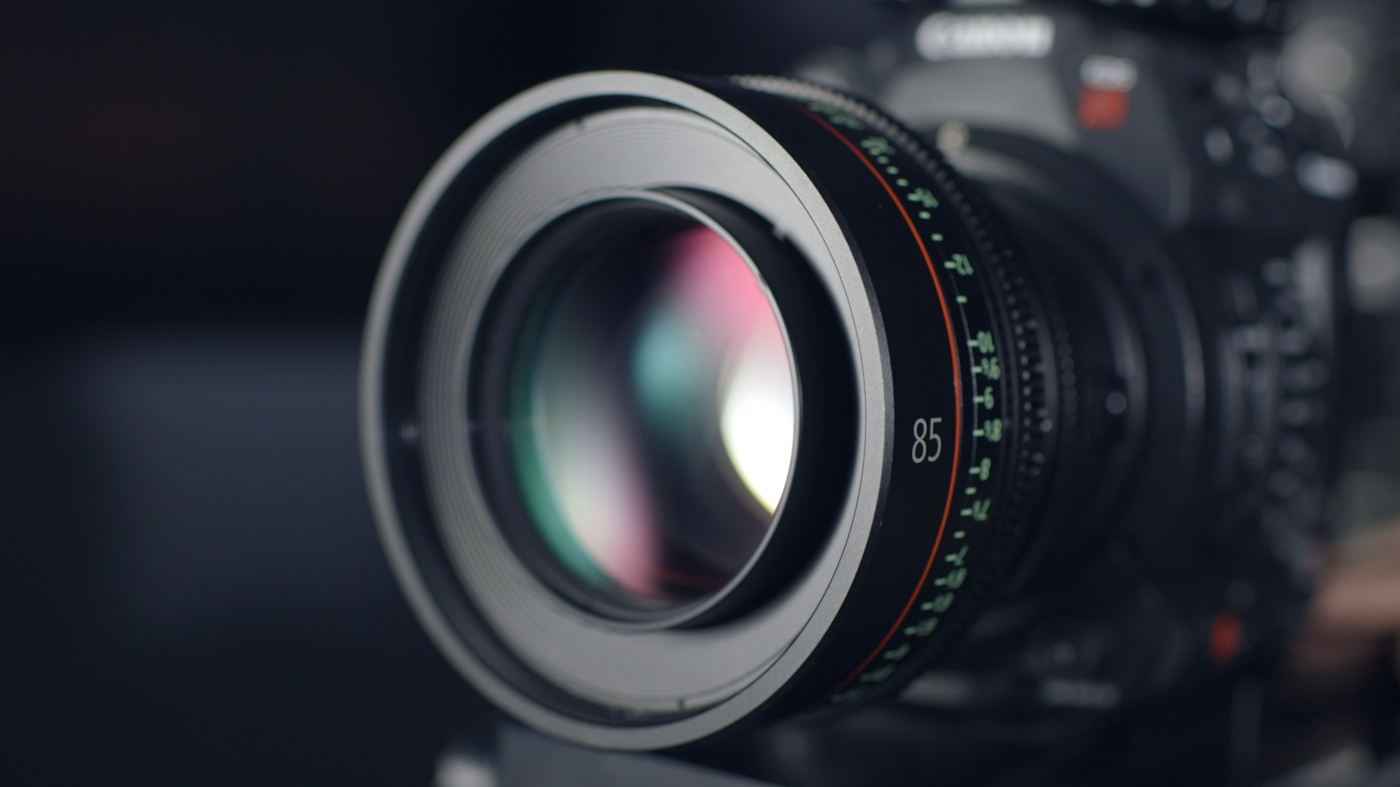
header photo: ShareGrid (2017) N/A. Available at: https://unsplash.com/photos/N10auyEVst8/info (Accessed: 10 December 2019).
 Documentation of MEDI512 "Experiment"