Printing images in the darkroom

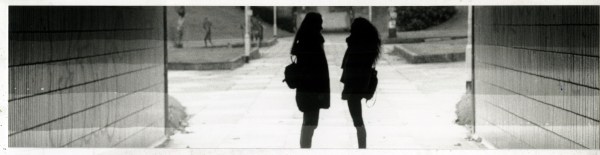
I consulted the contact sheet to decide which image I wanted to print as a photographic enlargement, which is way larger than the negative and made by projecting an enlarged image of the negative onto photographic paper. The first step was setting up the enlarger: I selected a negative from the contact sheet to work... Continue Reading →

Making a contact sheet

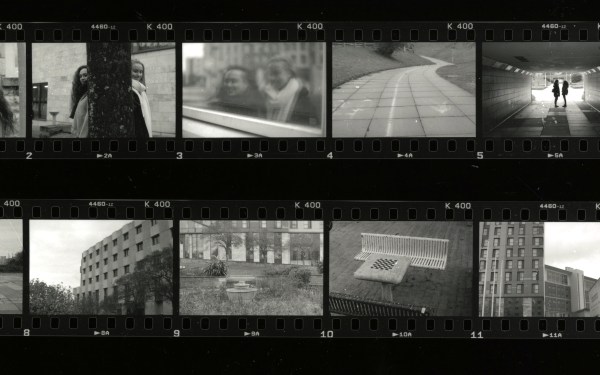
Before deciding on a photograph to enlarge and print it is necessary to print a contact sheet – a visual representation of the negatives. To make a contact sheet, I placed a glass fronted contact frame centrally under the enlarger head. I raised the enlarger head to a height where the light just surrounds the... Continue Reading →

Film Processing

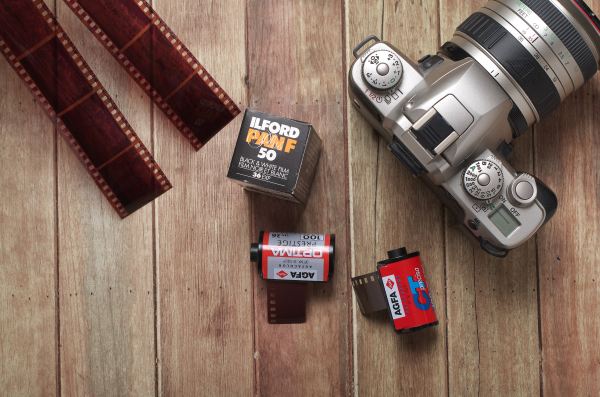
After shooting all the frames on a 35mm film, the film needed to be processed in a complete dark environment. In order to do so, the film from the film canister was loaded onto a film reel which holds the film in spiral shape. It is important to take as much time as necessary during that... Continue Reading →

35mm Analogue Camera Control

Before I could start with the practical implementation of my photography project, I needed to familiarise with the camera control of the 35mm SLR camera. Therefore, it was necessary to have a look at the relationship between aperture, shutter speed and ISO and the effect all of them have on the exposure of a photograph.... Continue Reading →

Colour Theory

For my project for the Illuminate festival it was necessary to have a closer look at the relationship between the additive and subtractive colours (also called primary and secondary colours) to understand colour contrast in still and moving images. Red, blue and green are the three primary colours. They are the only colours that the... Continue Reading →

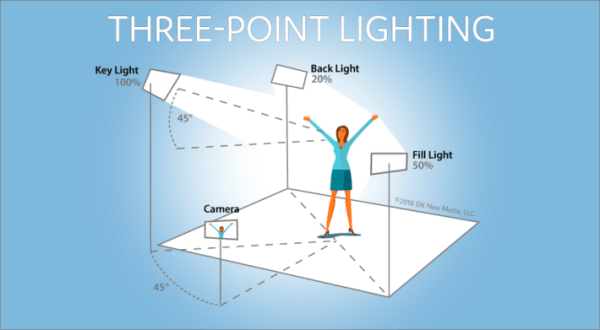
Three-Point Lighting

Craig Whyte introduced me to the standard lighting technique used in visual media such a film or photography, the so-called three-point lighting technique. This versatile but simple system forms the basis of most lighting and was essential for our following lighting exercise. The three lights that are used for this technique are called key light,... Continue Reading →

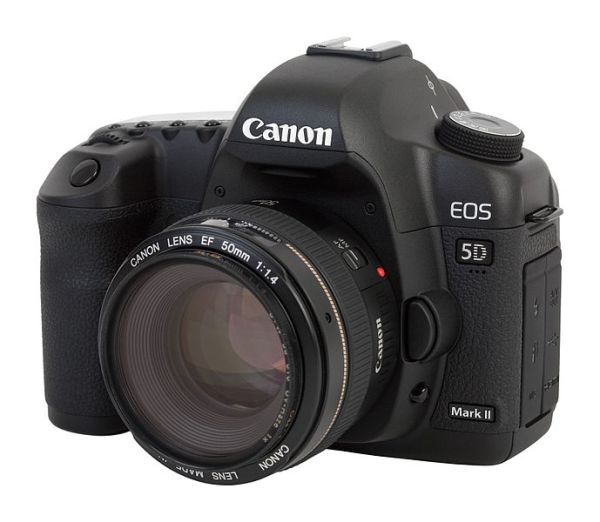
Digital Cinematics: The Canon EOS 5D Mark II

The two week workshop Digital Cinematics was the perfect chance to look at creative technologies and ideas of cinematography using large sensor digital cameras. The camera we used for filming our own footage was the Canon EOS 5D Mark II, a full-frame digital single-lens reflex camera. As Canon (2008) announced it was the world’s first... Continue Reading →

Create a website or blog at WordPress.com

Up ↑

Design a site like this with WordPress.com
Get started