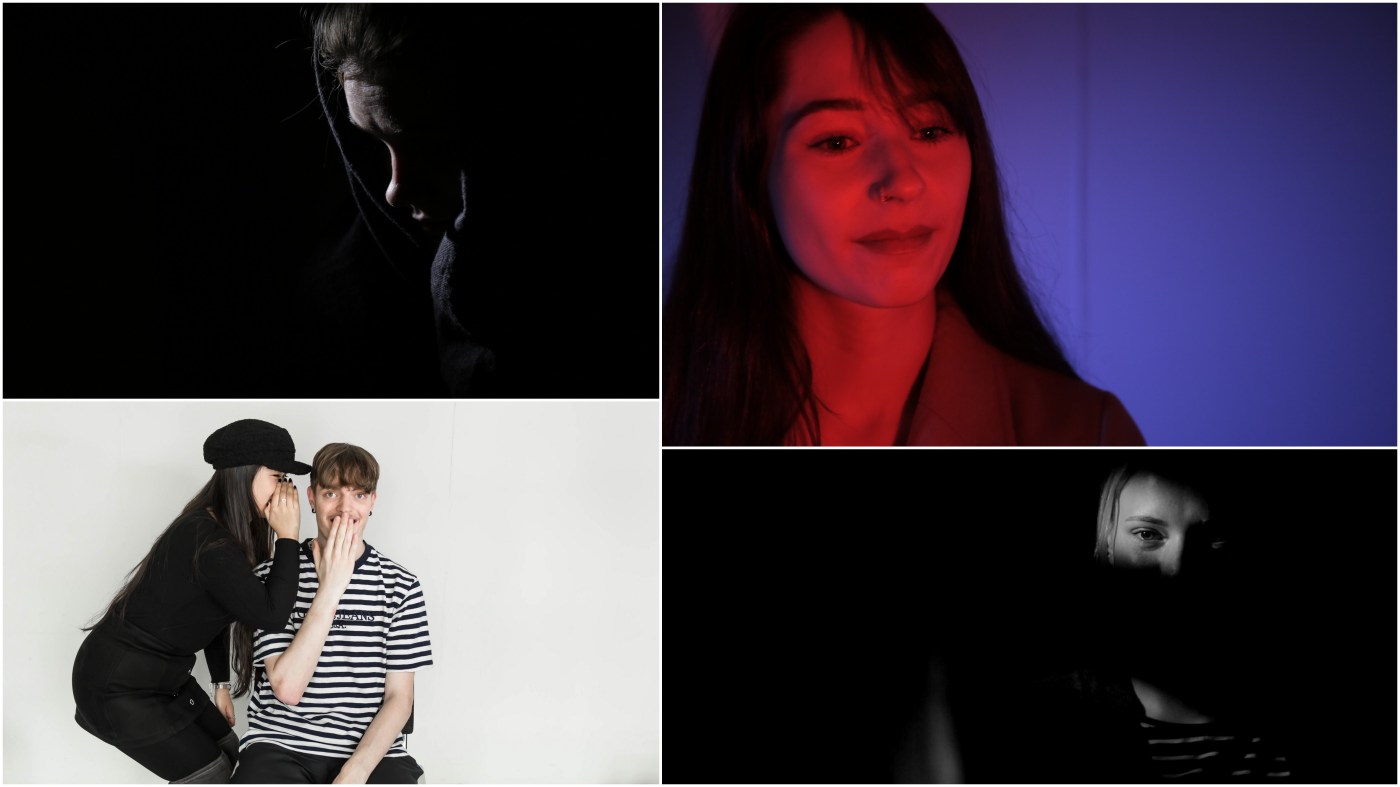
After Craig Whyte introduced us to the cinematic lighting techniques of portable lighting equipment, we worked in three teams to carry out a lighting exercise. Our task was to shoot four different lighting scenarios using given examples incorporating the use of filters, gels and the basic three-point lighting technique. We should record at least 10 seconds for each shot and three different camera angles (wide shot, medium close-up, close-up or over shoulder shot) for each scene. In 90 minutes, we should film the scenarios Film Noir, Sci-Fi, Horror and High-Key.
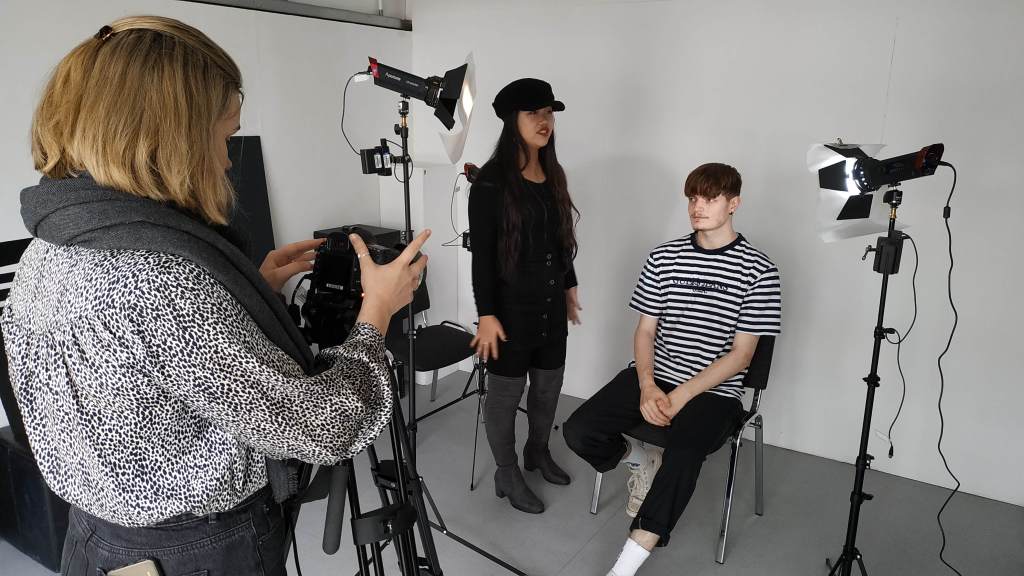
I was in a group with four other students and we went to room 112 in Scott Building to film all our scenes in the small back room. The focus on our camera was set manually and we used 1/50 sec shutter speed and ISO 400 while controlling the exposure with the aperture. We alternated between the roles of director, camera operator, lighting assistant and actor.
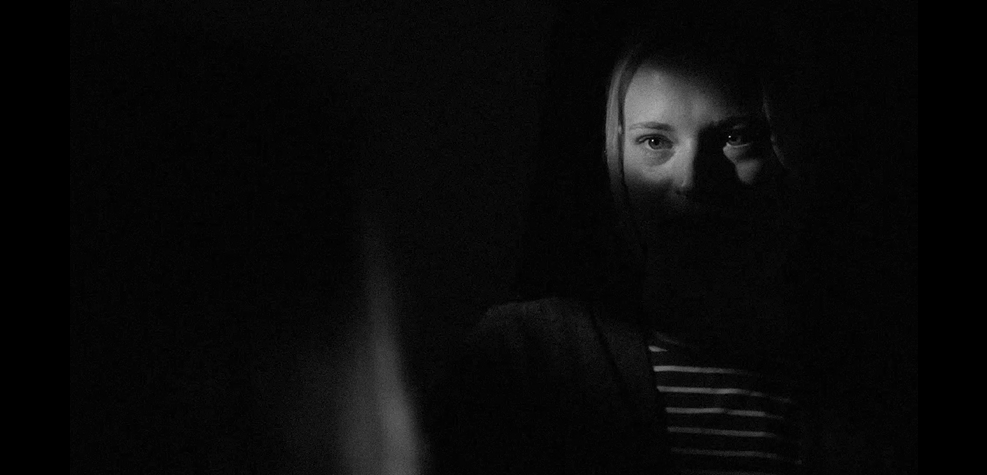
The Film Noir scene that we filmed should resemble a crime scene: A police officer is interviewing the suspect, of whom only the eyes are visible and lit. The style was embodied by emphasizing shadows and harsh light – a sense of volume and depth was created. We used a cardboard with cut-out slots to create dramatic lighting.
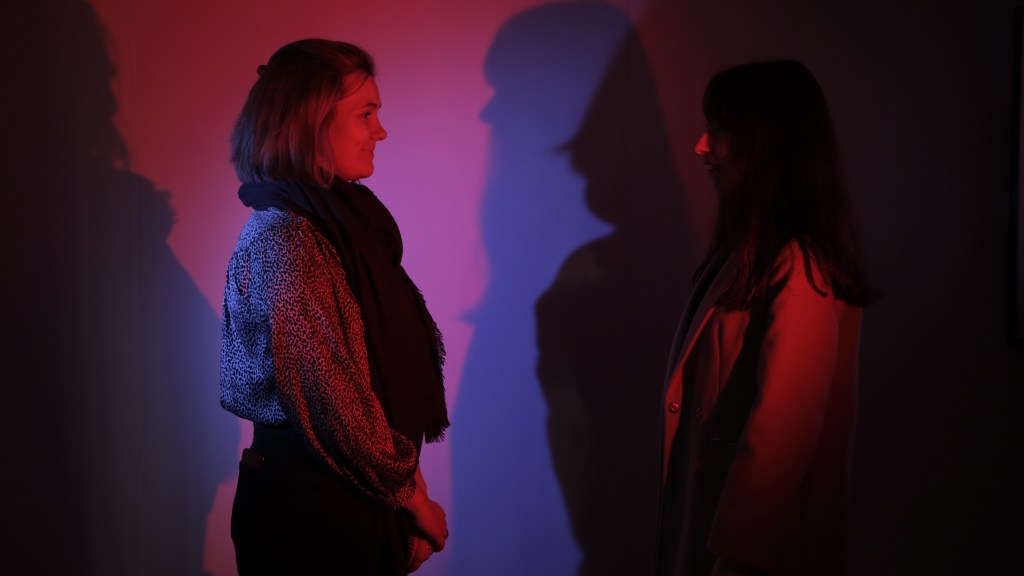
Our Sci-Fi scene was characterized by the blue tone colour temperature with a futuristic style. We incorporated red and blue lighting gels and shadows cast on to the background and shot some film clips: Two actresses turn towards each other and hand over a set of keys. We used a medium close-up and close-up angle in addition to a over shoulder shot.
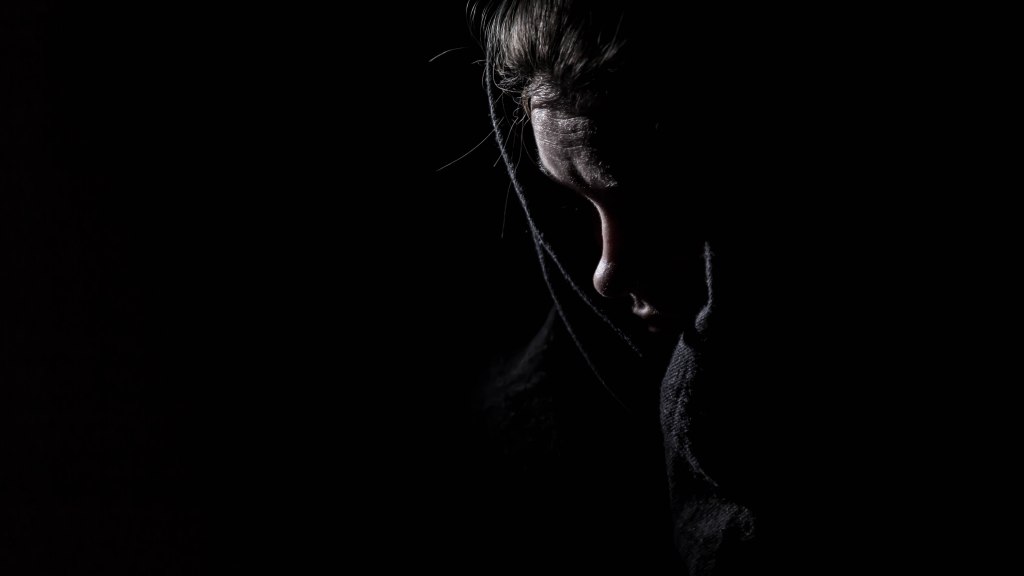
Only one light was used for our horror clips. We created dramatic shadows so that only a small part of the actress’s face was lit. Out of the shadow behind her comes a hand that appears to grab her face. We tried to create a spooky and suspenseful atmosphere without too much effort in the lighting.
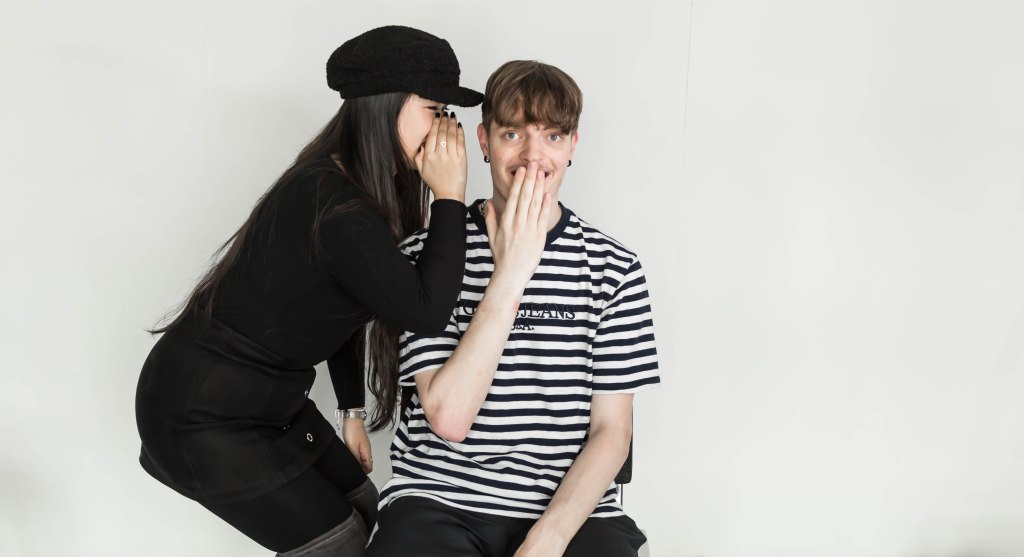
Our last clip was shot in high key lighting and consisted primarily of light tones without dark shadows. We filmed the actor in front of the white wall and used three lights with soft filters to lift any shadows on his face.
When we had our footage, we imported it in Premiere, applied basic colour corrections and reviewed the clips with the other groups. I was very content with our results, they looked very professional. We succeeded in creating different lighting scenarios and we managed to accomplish that with limited time, equipment and space. All in all, I enjoyed this workshop very much! I learnt a lot of new things about portable lighting and it was amazing to put our new knowledge straight into practice.
 Documentation of MEDI512 "Experiment"