
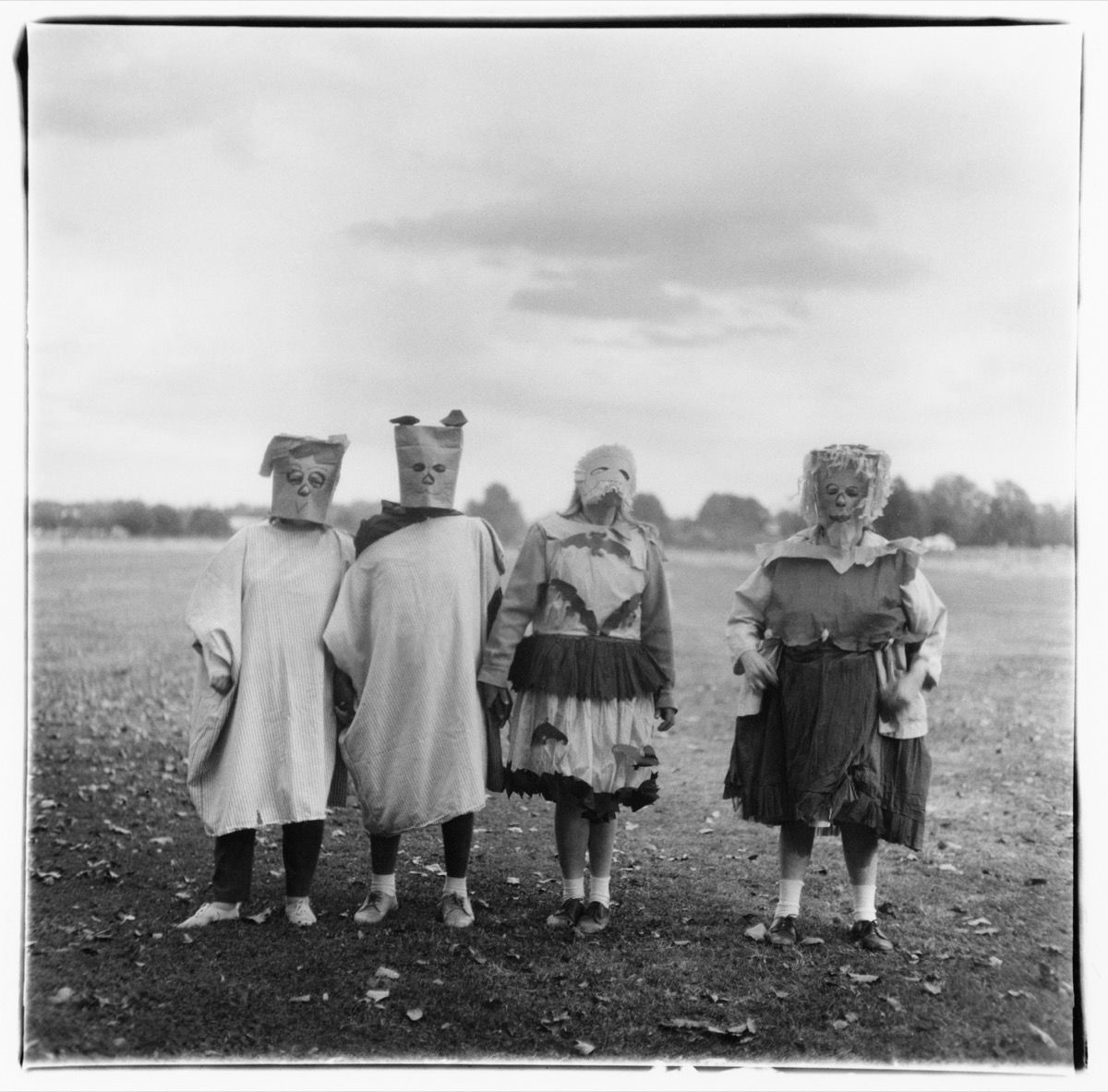
When I saw the photographs of Diane Arbus for the first time, I was very impressed by them. The feelings that the images convey are beautiful, the displayed persons are shown in such an intimate and personal way. I began to research more about Arbus and found a great book in the library that collects a lot of stunning images and texts by Arbus herself. I couldn’t believe she wrote about her photographs:
„I hate the idea of composition. I don’t know what good composition is. I mean I guess I must know something about it from doing it a lot and feeling my way into it and into what I like. Sometimes for me composition has to do with a certain brightness or a certain coming to restness and other times it has to do with funny mistakes. There’s a kind of rightness and wrongness and sometimes I like rightness and sometimes I like wrongness. Composition is like that.”
(Arbus, 1972, p. 10)
Even though it seems like a perfect description of the photographic work, her images are always intuitively so well composed I found it hard to believe she hated the idea of it. Of all her different photographs my favourites are the ones in which she did photograph “freaks”, as she called them:
“Freaks was a thing I photographed a lot. It was one of the first things I photographed and it had a terrific kind of excitement for me. I just used to adore them. I still do adore some of them. I don’t quite mean they’re my best friends but they made me feel a mixture of shame and awe. There’s a quality of legend about freaks. Like a person in a fairy tale who stops you and demands that you answer a riddle. Most people go through life dreading they’ll have a traumatic experience. Freaks were born with their trauma. They’ve already passed their test in life. They’re aristocrats.”
(Arbus, 1972, p. 3)
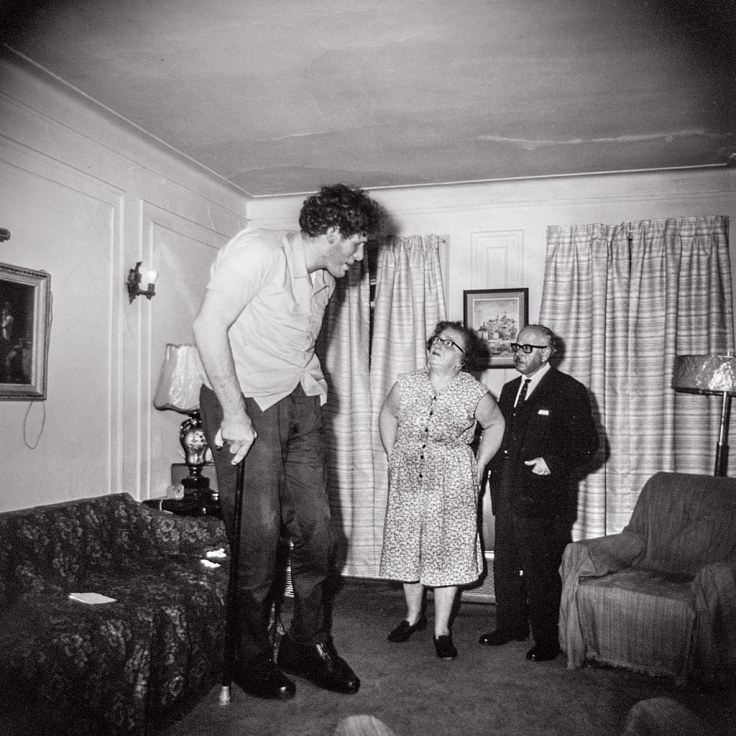
Arbus, D. (1970) A Jewish giant at home with his parents, in the Bronx, N.Y. Available at: https://www.nytimes.com/2014/04/13/arts/design/diane-arbus-recorded-a-bronx-familys-unsettling-dynamic.html (Accessed: 19 December 2019).
The “freaks” look vulnerable and always stand out against their surroundings: the Jew giant in the picture above is nearly twice as tall as his parents and needs to duck his head to avoid hitting the ceiling. But his body language and facial expression as well as the way his parents look up to him add a very emotional connotation to the photograph. The giant is a child just like others and visits his parents who love and care for him. Only his height makes him special.
I love how Arbus captures these people and their extraordinary outer appearance or characteristics but still presents them in a very dignified and human way. By emphasizing their otherness, she also shows that they are not as different as one might think.
Arbus, D. (1972). Diane Arbus. New York: Aperture.
header photo: Arbus, D. (1970) Untitled (4) . Available at: https://www.artsy.net/article/artsy-editorial-revisiting-diane-arbuss-final-controversial-series (Accessed: 09 December 2019).
 Documentation of MEDI512 "Experiment"