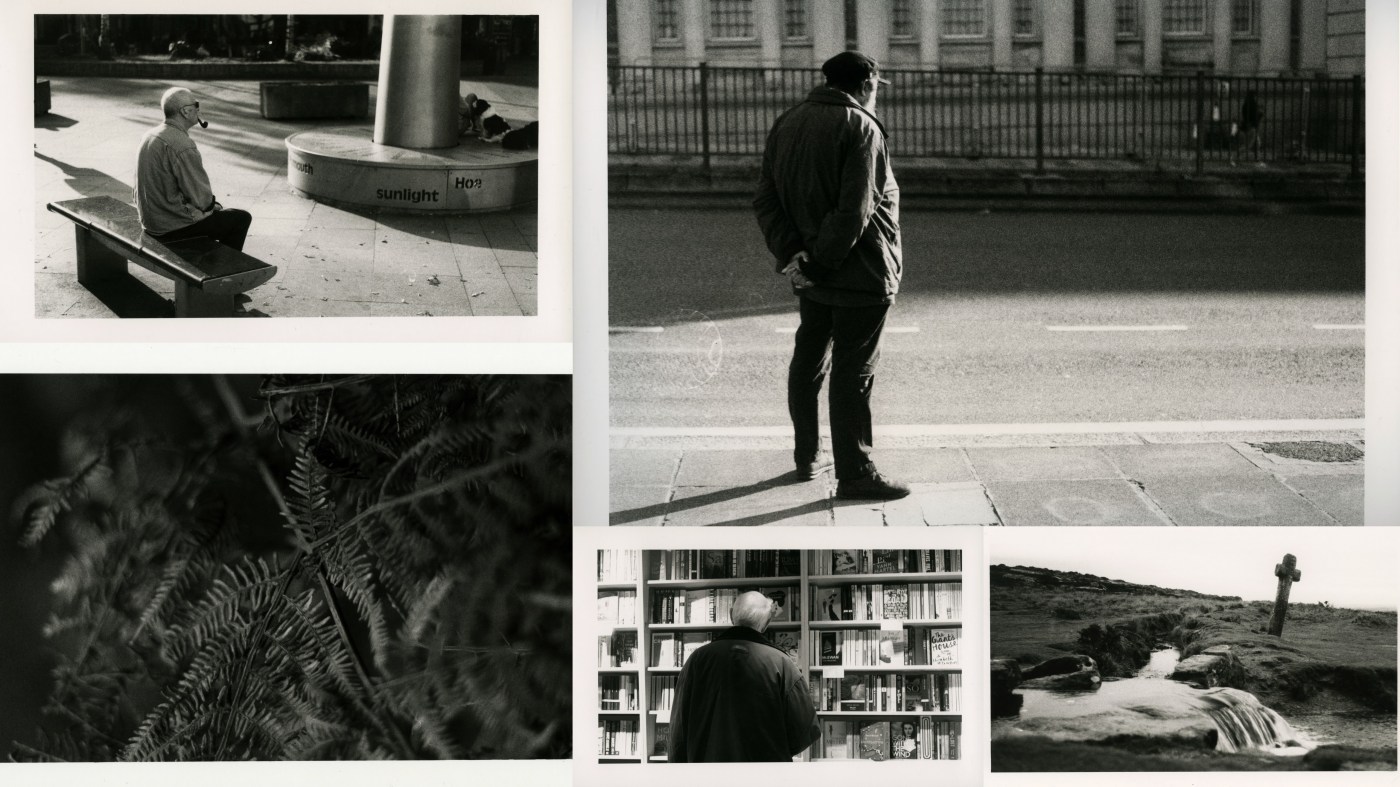
After several hours in the darkroom and going through all the necessary steps (setting up the enlarger, printing a contact sheet, printing enlarged photos,…) I came up with several final prints that fulfilled the criteria of portraiture, landscape and a recreation of an already existing photograph.
After consulting the contact sheet, I saw that I have had problems with a consistent exposure throughout all the images. The reason for that is that I took photos under different light conditions: from a bright but rainy sky at Dartmoor to street photography on a sunny day to shots indoor with only little light. I decided to choose the final pictures with the help of the negatives instead of the contact sheet and simply adjust the exposure for the individual prints. I made test strips for every image to find the perfect exposure.
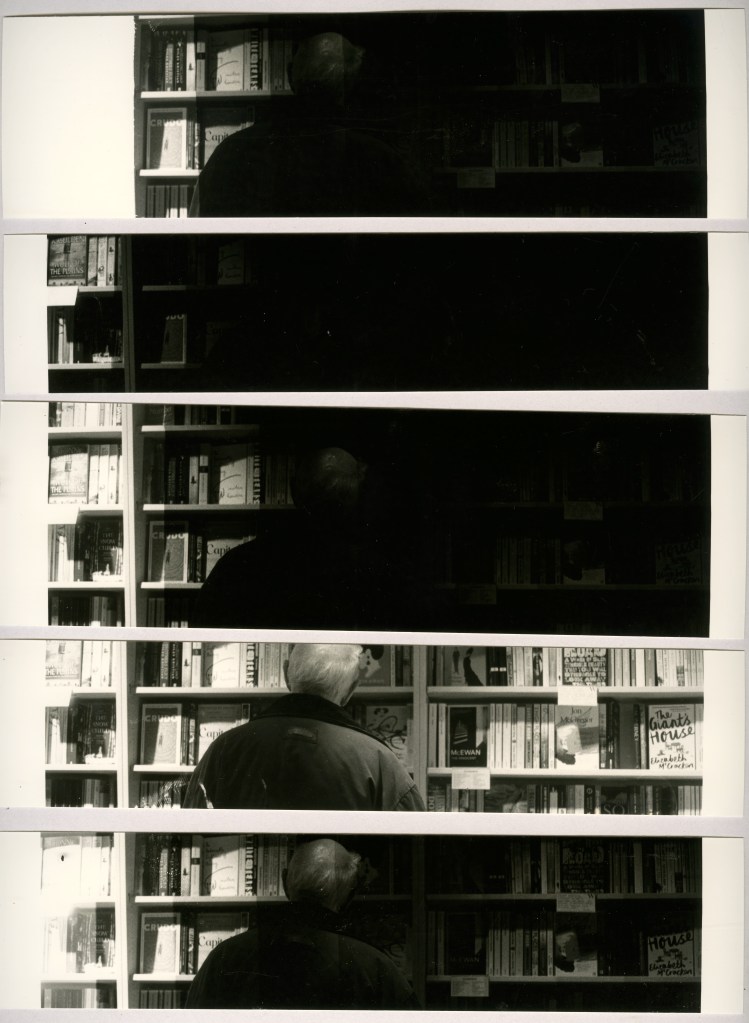
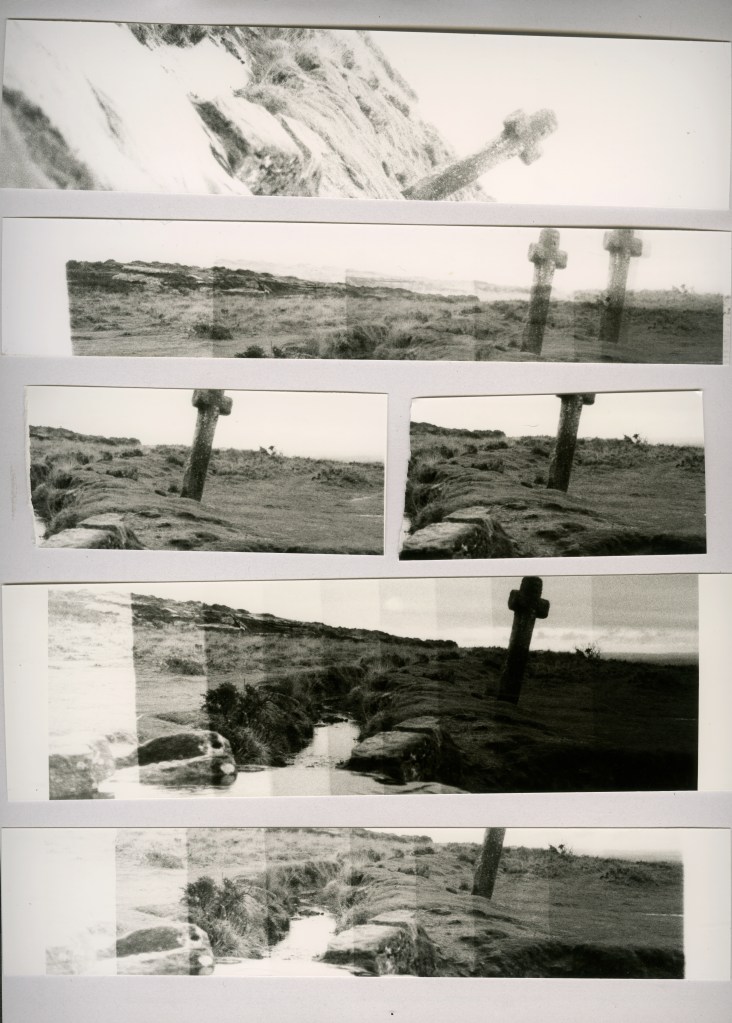
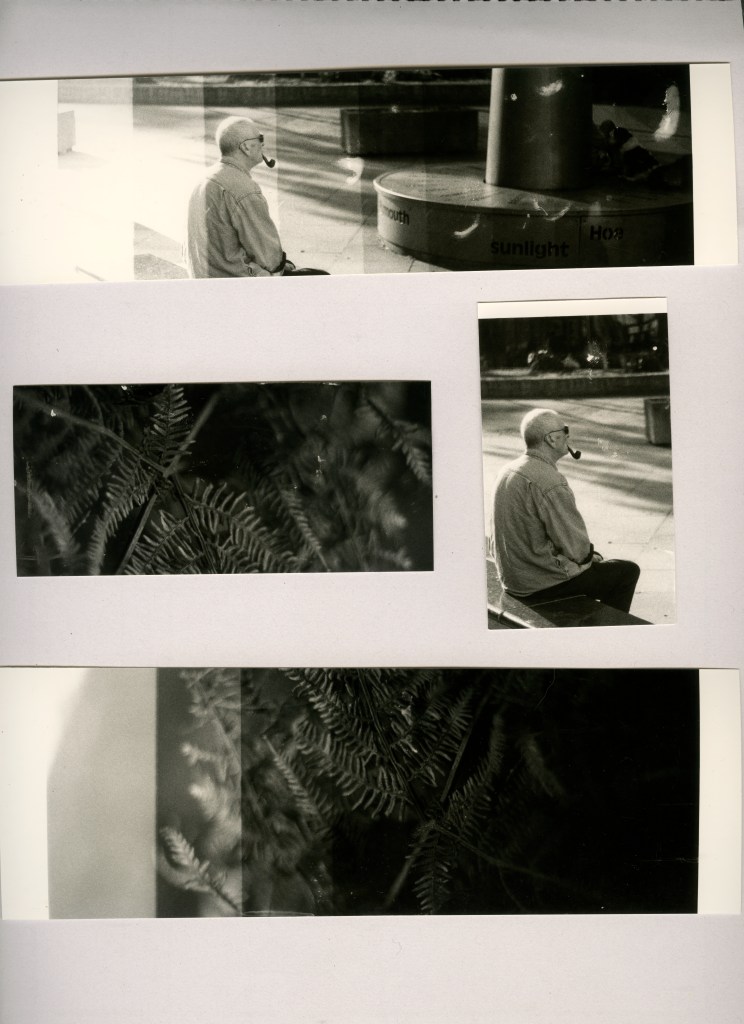
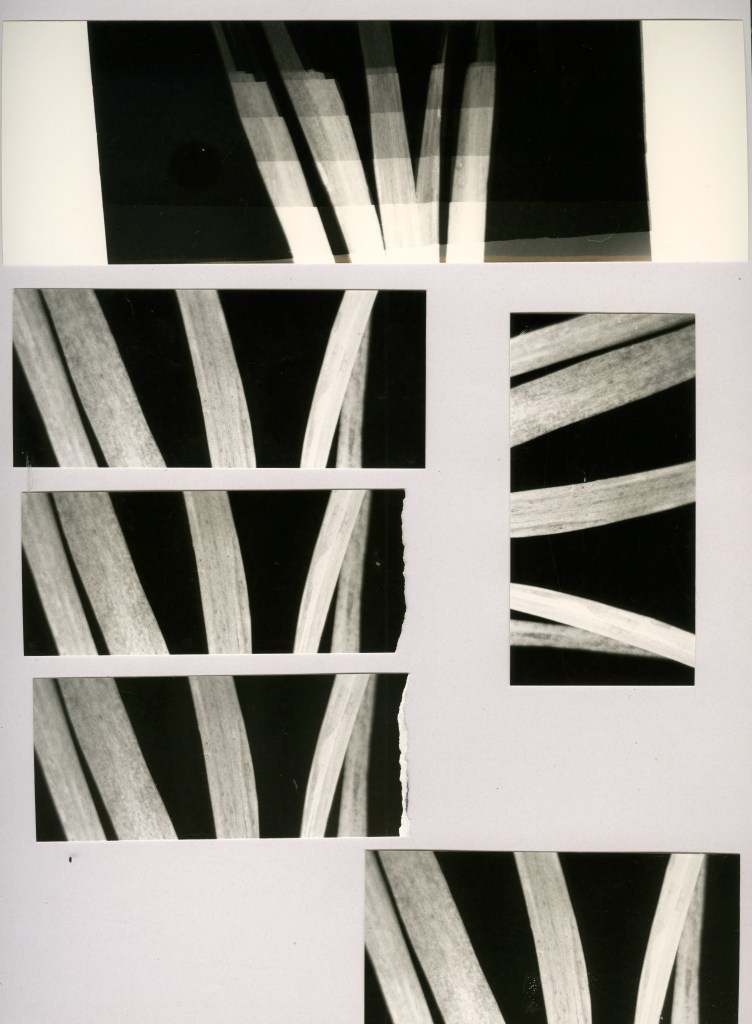
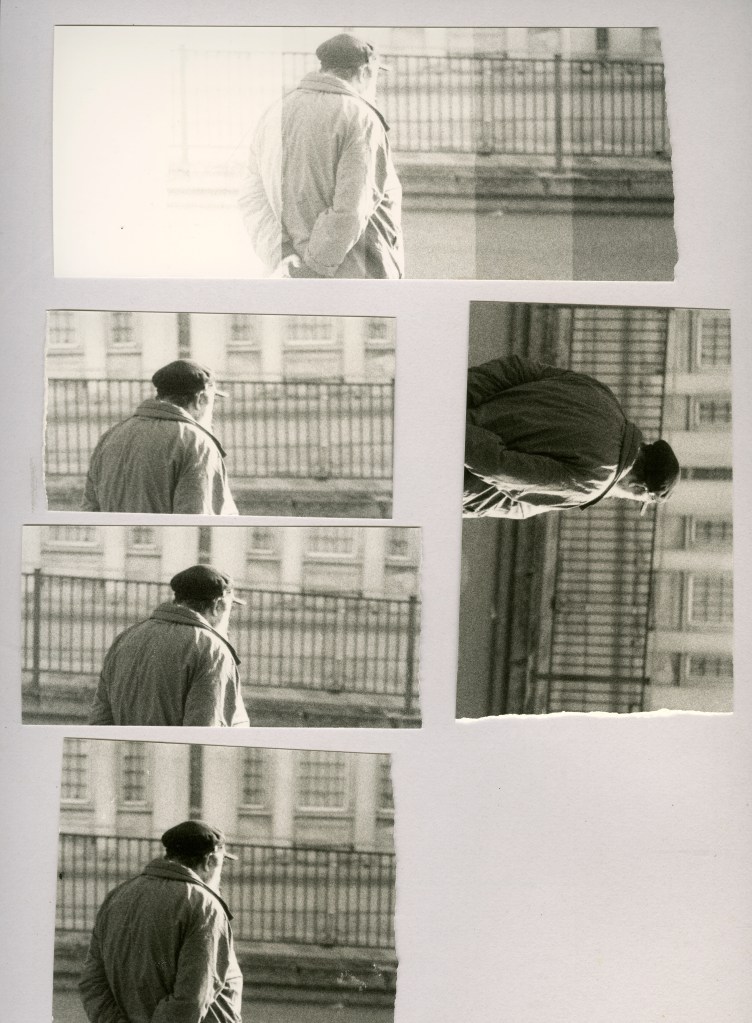
I made different test strips to find the right exposure times for my images
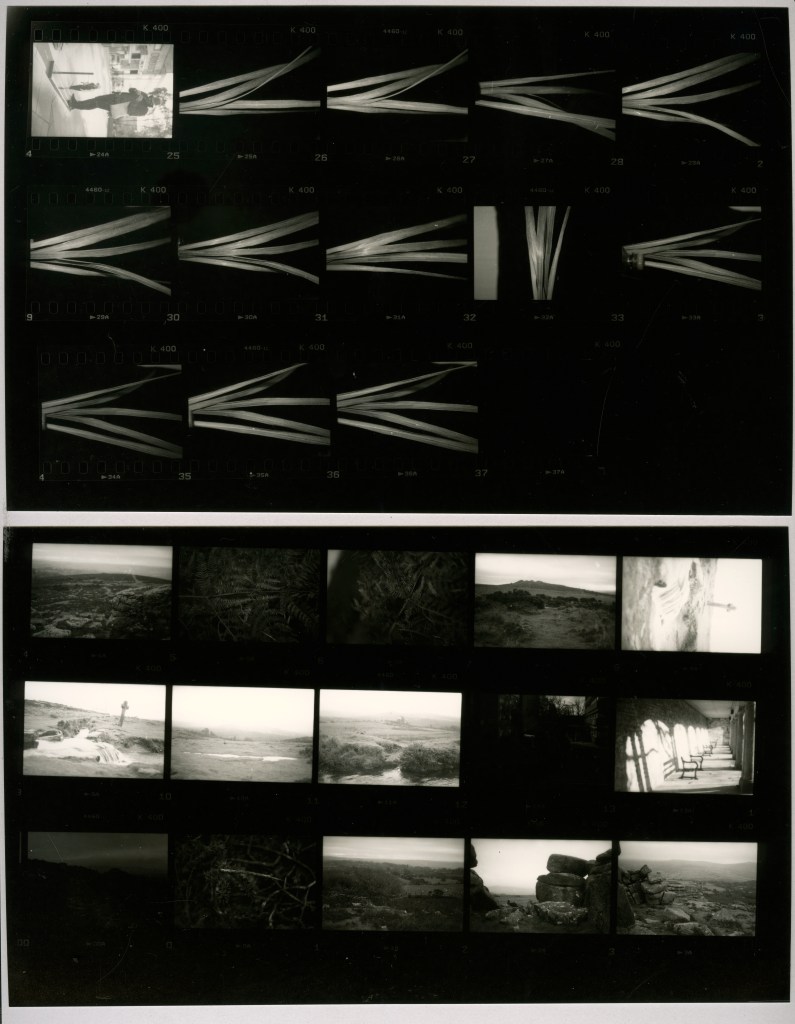
Portraiture
For my portraitures I tried out street photography. The day was sunny and warm so I found an old man who peacefully sat on a bench and enjoyed his pipe. I am very fond of this picture, I like the way the silhouette of the pipe is clearly visible.
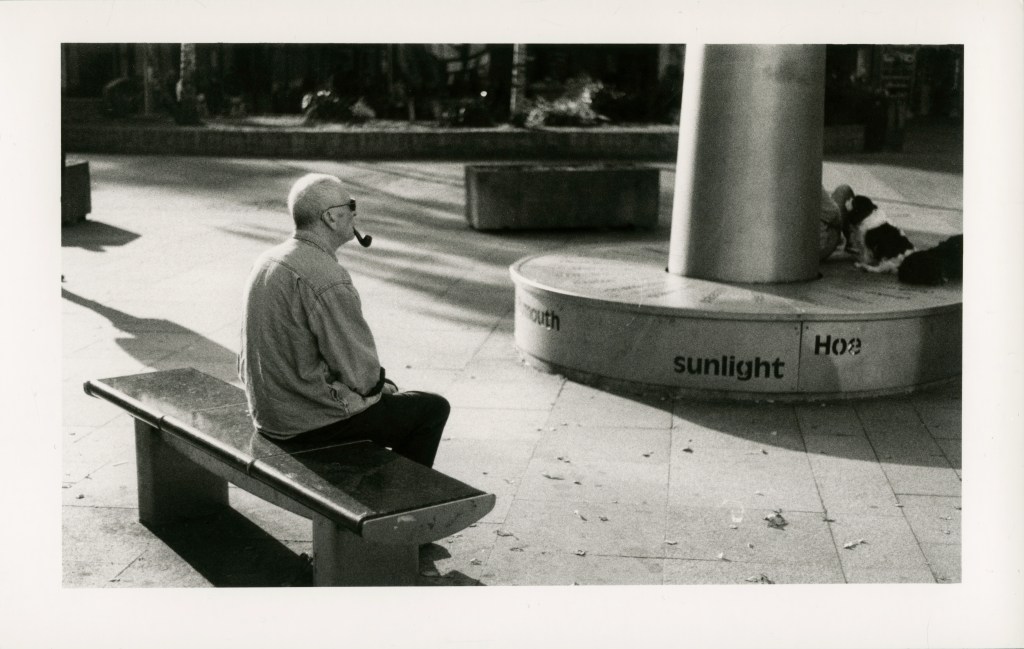
The second picture I took is from this other old man who was waiting for the bus. I saw how the backlight created hard shadows and wanted to capture the moment. In this picture, I really like the minimalism because there are no other elements distracting from my main subject.
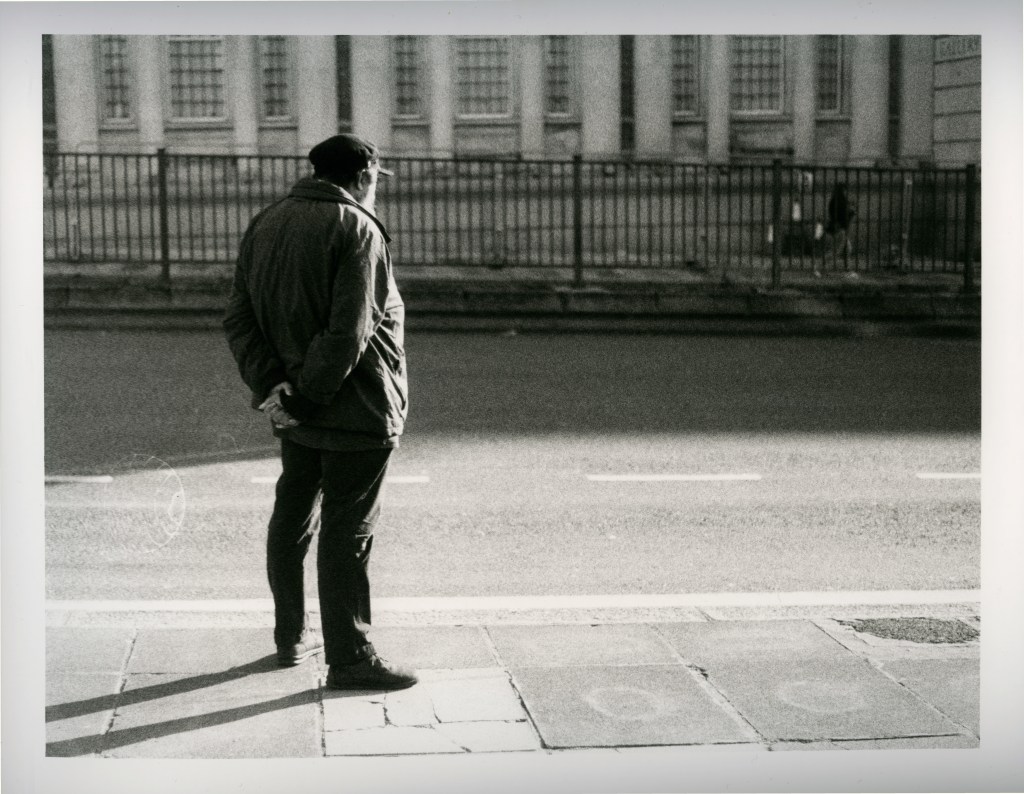
Both compositions were chosen carefully, the photos were taken under consideration of the rule of thirds: Both men are positioned on the imaginary line that vertically divides the pictures in three equal parts.
Landscape
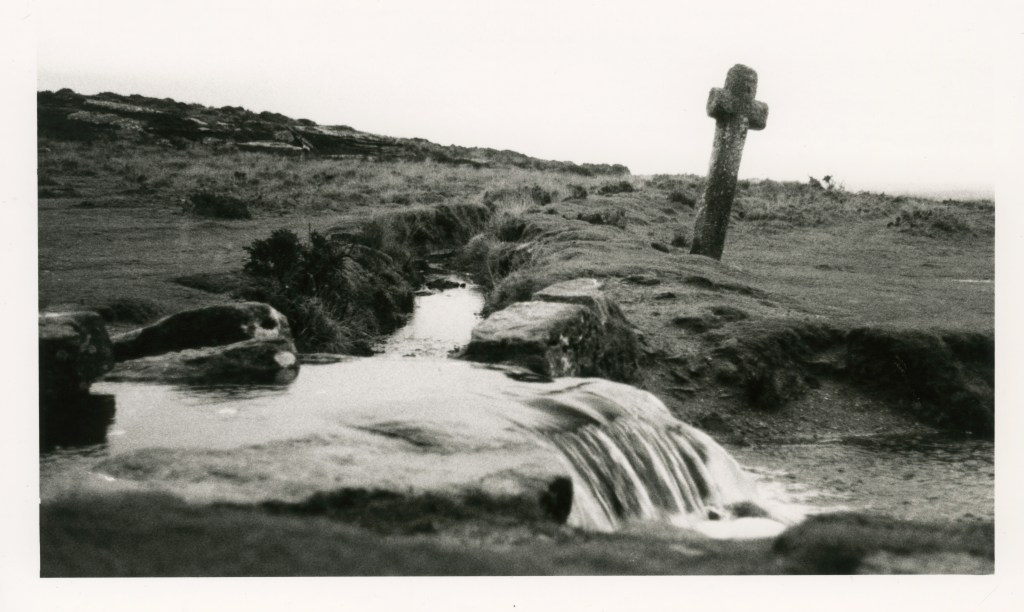
My landscape photo shows the Windy Post in Dartmoor. I am quite happy with this shot even though the exposure could be better. I consciously chose to work with a longer exposure time to show the water movement in the little waterfall. I took the picture with 1/6 second and tried to stabilize the camera on my backpack, because I didn’t have a tripod. Unfortunately, it is still a little bit blurred. The next time I will make sure to use a tripod.
I took another close-up photo of a fern that I saw on my hike. I tried to capture the details and structure of the leaves so I chose to fill up the whole frame with the plant. I love the result – the image is a little bit abstract, but calming and peaceful at the same time.
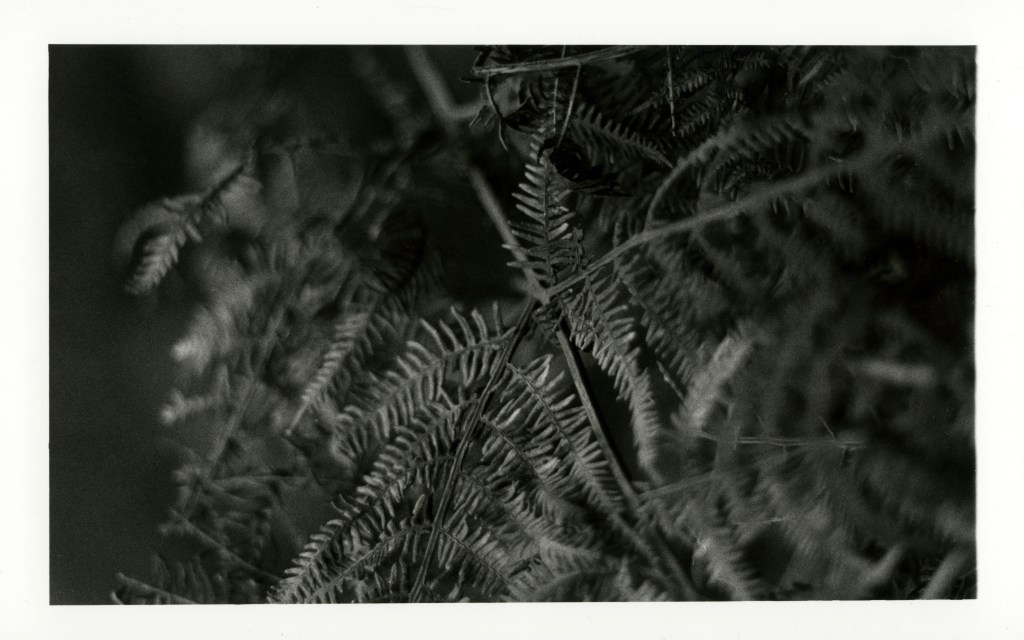
I had enough photographic paper left to creatively experiment with different exposure times in the darkroom. So I took the negative of the fern and created a double exposure by turning the photo paper in the middle of the exposure time. The result looks like that:
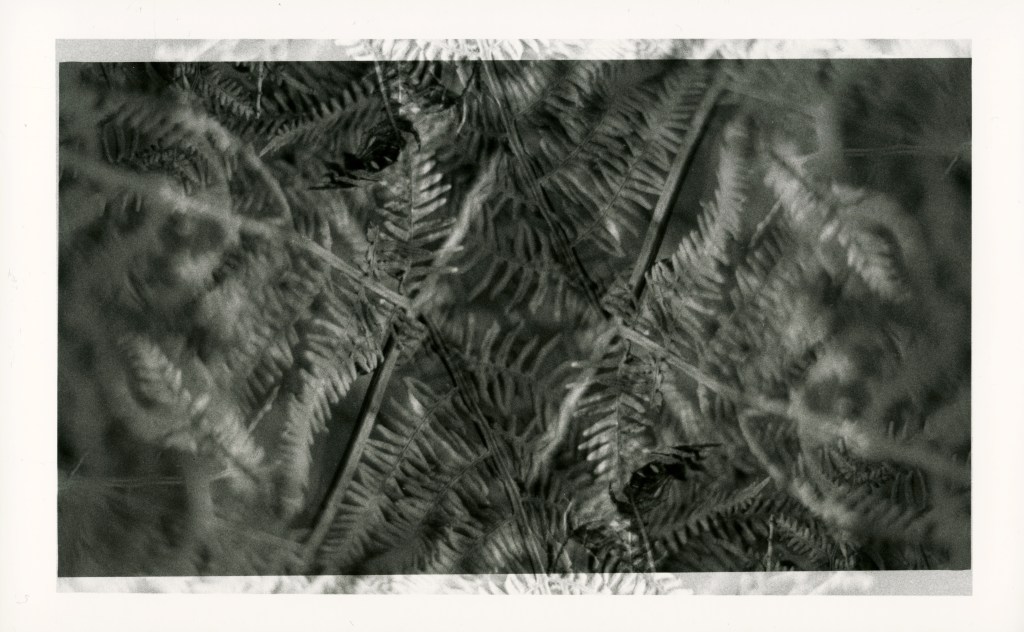
I like the resulting symmetry in the photo and really enjoyed doing something different from “normal” printing.
Recreation of an existing photograph
The photo I tried to recreate was “Lily Stalks” by Brett Weston. I didn’t have lily stalks so I took some similar looking stalks and glued them together at the bottom so they would spread out at the top. I found it hard to recreate the lighting situation because I only had one lamp but no softbox or filters to soften the light. I still tried to install a soft light without hard shadows.
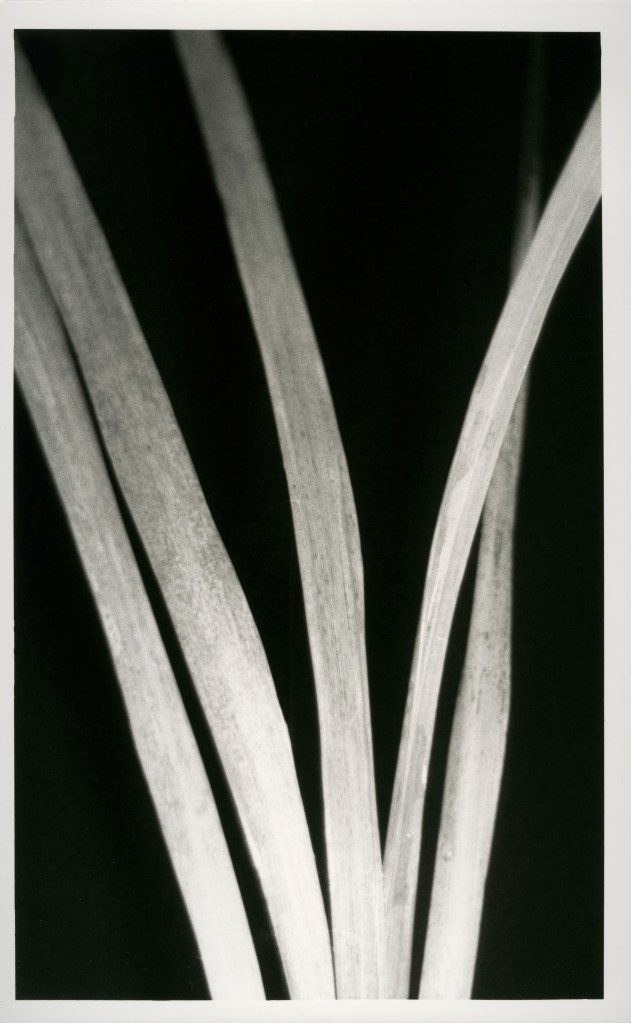
I am not so happy with the way the image turned out. Maybe it was the lighting, the stalks themselves or my camera settings, but my stalks simply didn’t show as much details as Weston’s original. When I had the final print in my hand, I also saw that I failed at recreating the light – it is way too bright in my shot and focused on the wrong part of the stalks. Next time I will take more time for a closer examination of the original image.
All in all, I can say that the Photochemical Experiments workshop was the most interesting one for me. I loved that we had so much time to fully immerse in the subject. While I certainly enjoyed the animation or Digital Cinematics workshops, I know that photography is my personal preferred medium to work with.
In my leisure time I had only worked with DSLRs, so shooting film on analogue cameras was highly fascinating! When I held the final prints in my hand, I was just amazed by the thought that I personally underwent every necessary step throughout the whole process: I loaded the film into the camera, took the pictures, processed the film and even printed the final results on photographic paper. It was the first time ever that I felt truly involved in the creative process because I had no equipment or software to do the work for me. In comparison to most of the Adobe software I had introductions for, I know that I really learned a lot in those four weeks. I am fully capable of doing the whole thing all over again, without additional help or guidance. My high interest in analogue photography surely helped me to learn everything about it.
Additionally, I really enjoyed spending time in the darkroom and getting to know all the chemical processes that “do the magic” of making an image appear on the paper. I will definitely continue to work with analogue photography, even I might not get another chance to work in a darkroom in the future.
 Documentation of MEDI512 "Experiment"